

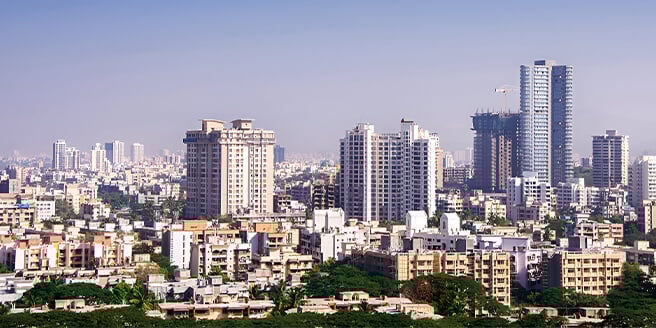
A 10-phase honest guide from someone who’s walked these projects, sat with these buyers, and watched these decisions play out — for better or worse — over 1,200 closed deals.
Why I Wrote This Bible
I’ve been in the Navi Mumbai property game long enough to see the same buyer make the same five mistakes — over and over, in 2018, in 2021, and still in 2026. The locations change. The prices change. The mistakes don’t.
Last month, a couple from Vashi sat across from me and said: “Jayesh, we’ve been reading 99acres, Housing.com, NoBroker, MagicBricks for three months. We still don’t know what to do.” They had 47 browser tabs open. They had a budget of ₹1.2 Cr. They had no idea what 1.2 Cr actually buys you in 2026 once you add stamp duty, GST, parking, society fees, and the things nobody tells you about.
That’s why this guide exists.
Most “buyer’s guides” online are written by people who’ve never sat at a registration office at 4 PM watching a deal nearly collapse over a missed OC. I have. Many times. This bible is everything I wish someone had handed me when I bought my first flat in Sector 35 Kharghar a decade ago.
It’s organised as 10 phases — the actual order in which a real Navi Mumbai purchase happens. Not 10 random “tips.” Not a “top 5 areas” listicle. A sequenced journey, from the moment you start budgeting to the moment you decide to sell, ten years later.
Read it cover-to-cover if you’re new. Jump to the phase you’re in if you’re mid-deal. Either way, bookmark it — you’ll come back.
Welcome.
The 30-Second Bible (For Skimmers)
If you only read 250 words today:
- Real budget = sticker price + 18-22% on top. A ₹1 Cr flat costs ₹1.18-1.22 Cr all-in once you add stamp duty (6% in NMM, 5% if registered in a woman’s name), GST (5% on under-construction), parking (₹3-8 lakh), society maintenance corpus, registration, brokerage if any, and ICP/CIDCO charges. Plan from this number, not the brochure number.
- The 4 sub-markets that matter: Kharghar (₹17,500/sq.ft, end-user-led, infra-saturated), Panvel (₹13,800/sq.ft, airport play, biggest MTHL beneficiary), Taloja (₹8,700/sq.ft, mass-market entry, MIDC-driven), Upper Kharghar (emerging premium corridor, airport-adjacent). Premium tier: Nerul/Seawoods/Vashi at ₹28-29K/sq.ft.
- The single biggest 2024-26 shift is Atal Setu MTHL — operational since Jan 2024 — which compressed Sewri-to-Ulwe to 20 minutes. It rewrote price logic across all 4 sub-markets.
- The Top 7 Posh Areas in Navi Mumbai (read the full breakdown) tells you where price meets prestige.
- The “Maha Mumbai 3.0” expansion (deep dive here) is reshaping NMM into a metro region of 4 crore people by 2035.
- Skip new-launches if you can’t wait 3-5 years. Pre-launch math looks great until possession slips by 24 months and the developer’s other project gets a RERA complaint.
- Buy from a developer who has delivered ≥3 projects in NMM. Not their “experience” — their delivered count. Ask for the OC dates.
- If you’re new to NMM, the Upper Kharghar guide is the best primer on where the airport money is moving next.
That’s the spine. Now let’s get into the bones.
Phase 1 — Honest Budget Math (Or: Why Your ₹1 Cr Is Really ₹85 Lakh of Flat)
Most buyers I meet have done this calculation: “₹1 Cr budget, 2 BHK in Kharghar at ₹17,500/sq.ft = roughly 570 sq.ft carpet area.”
That’s wrong by about ₹20-25 lakh.
Here’s what your ₹1 Cr actually buys when you do the honest math.
The All-In Cost Formula (NMM Edition, 2026)
For a 2 BHK at a sticker price of ₹1.00 Cr (under-construction):
| Line item | Amount | Notes |
|---|---|---|
| Base price (carpet × rate) | ₹1,00,00,000 | The brochure number |
| GST @ 5% (under-construction only) | ₹5,00,000 | Zero on ready-to-move with OC |
| Stamp duty @ 6% | ₹6,00,000 | 5% if sole/joint registered in a woman’s name |
| Registration fee (1% capped at ₹30,000) | ₹30,000 | |
| Parking | ₹4,00,000 | ₹3-8 L depending on project |
| Floor rise (₹50-150/sq.ft × floor) | ₹2,50,000 | Higher floor = higher charge |
| Club / amenities | ₹1,50,000 | One-time |
| Society formation corpus | ₹75,000 | Refundable but locked for years |
| Maintenance advance (12-24 months) | ₹60,000 | ₹2.5-4/sq.ft/month typical |
| Loan processing + legal | ₹50,000 | |
| Interior basics (essential, not luxury) | ₹3,00,000 | Modular kitchen, wardrobes, bathroom upgrade |
| All-in total | ₹1,24,15,000 | 24% above sticker |
If you’re buying a ₹1 Cr ready-to-move resale flat with OC, you skip GST and save ~₹5 L. But you’ll often pay 5-10% over circle rate to the seller. The hidden costs simply move around.
Maharashtra’s Reckoner Rates rose 10% in 2025 — most buyers didn’t track this and overpaid stamp duty on outdated numbers. Always pull the latest RR rate for the project’s exact node before signing.
The “₹85 Lakh” Trick Most People Miss
If your true budget is ₹1.2 Cr (everything in), you should be flat-shopping at a sticker price of ₹85-95 lakh, not ₹1.20 Cr. The 18-22% on top eats the gap.
Buyers who shop at sticker = budget end up either: 1. Overstretching the loan (rejected or approved on thin margins), 2. Cutting corners (skipping registration insurance, lowballing interiors), or 3. Walking away after months of work.
I’ve watched all three. None are fun.
EMI Reality Check
For a ₹85 lakh loan, 25-year tenor, 8.6% floating (current SBI MCLR-linked benchmark, April 2026):
- EMI = ~₹68,800/month
- Total interest paid over 25 years = ~₹1.21 Cr
- Banks typically allow EMI ≤ 50% of net monthly income → you need ₹1.4 L+ net per month to qualify comfortably
- Add ₹15-25K/month for society + utilities + parking + insurance
So a ₹1 Cr “purchase” needs roughly ₹1.6 L net monthly income to live in without house-poor stress.
GST 2.0 — Why Prices Didn’t Drop
Many buyers asked me in late 2025: “GST 2.0 came in, why didn’t prices crash?” I wrote a full piece on this here, but the short answer: developers absorbed the input credit benefit into margin, and CIDCO charges + reckoner hikes neutralised the rest. No relief reached the buyer.
The CIDCO Charge Nobody Warns You About
Every Navi Mumbai project sits on CIDCO leasehold land, not freehold. That means:
- An additional transfer charge (typically 5-15% of stamp duty value) applies on first sale and on every resale
- This is governed by CIDCO’s regulations, not NMMC’s — important to understand the distinction
- New buyers from Mumbai often don’t know about this and discover it at registration
Add this to your all-in math.
The Pre-Launch Trap (Read This Twice)
Pre-launch projects are often 25-35% cheaper than ready-to-move. Sounds great. Here’s the math nobody shows you:
- Possession promised: 36 months
- Possession actual (CRISIL/Anarock 2025 data on NMM projects): 48-54 months for 60% of projects
- Cost of rent for those extra 18 months at ₹25K/month = ₹4.5 L out of pocket
- Cost of pre-EMI interest while construction continues (₹85L loan @ 8.6%) = roughly ₹11 L of interest paid before you ever live there
So that 30% “discount” on pre-launch is often only a 10-12% real discount once you account for delays + carrying cost. Sometimes negative.
I tell first-time buyers: only do pre-launch if (a) the developer has delivered ≥3 NMM projects on time, and (b) you can absorb a 24-month possession slip without panic.
Phase 2 — The Location Shortlist Framework (7 Questions, In Order)
Here’s where most buyers start going wrong: they pick a location based on price-per-sq.ft alone. That’s like picking a spouse based on height.
I use a 7-question framework with every client. Answer them in order. The wrong answer to any question = you eliminate that location, no matter how attractive the price looks.
Question 1 — Where will you actually commute, 5 days a week, for 5 years?
Map your real commute, not your imagined one. From the project gate (not the metro station 2 km away) to your office desk. Add 15 minutes for walks/transitions on both ends.
- If you work in BKC → Kharghar/Seawoods/Nerul are 60-75 min via metro+train; Panvel/Ulwe are 75-90 min via MTHL+BKC connector
- If you work in South Mumbai → Ulwe is now 35-45 min via MTHL; Vashi/Nerul are 50-65 min via Harbour
- If you work in Powai/Andheri → Airoli/Ghansoli win (45-60 min via Airoli-Thane-Creek bridge)
- If you work in Taloja MIDC / NMIA → Taloja or Panvel are 15-30 min
- If you work from home → commute drops out, livability dominates
Question 2 — Schools and pediatric healthcare within 3 km?
If you have or plan kids in 5 years, this is non-negotiable. NMM is uneven here:
- Kharghar/Nerul/Vashi: dense — DAV, DPS, Ryan, Apeejay, NIFT-adjacent zones
- Taloja: thin — NDB Public + a handful, pediatric care 20+ min away in Kharghar
- Upper Kharghar: emerging — schools coming up but not all operational yet
- Ulwe: nascent — most families are still commuting kids out
Pediatric ER access at midnight is what matters. Do a Google Maps drive at 11 PM from your shortlisted project to the nearest 24-hr pediatric facility. If it’s >25 min, reconsider.
Question 3 — Daily groceries + monthly retail within 1 km?
Sounds trivial. It isn’t. Buyers who skip this discover they’re driving 8 km for vegetables for the next 10 years.
- Mature pockets (Kharghar Sectors 11-21, Nerul Sec 19-22, Vashi Sec 17): excellent
- Sectors 34-36 Kharghar: improving, still patchy
- Pushpak Nagar Ulwe: minimal — most families drive to Panvel
- Upper Kharghar / Bhokarpada Panvel: under-developed retail; expect 2-3 years more
Question 4 — Society profile match?
Walk into the lobby of three societies in your shortlist at 7 PM on a weekday. Watch who comes home. That’s your community for the next decade.
- Ground-floor commercial = busier, retail-anchored
- Pure residential gated = quieter, family-dominated
- IT-tower-adjacent = young couples, transient resident profile
- Old CIDCO + new private mix = age-diverse, more grounded
This isn’t class snobbery. It’s match-fit. A retired couple buying in an IT-young society will feel out of sync within a year.
Question 5 — What are 3-, 5-, 10-year infrastructure commitments?
Don’t buy on a brochure-promised metro that hasn’t broken ground. Buy on operational + under-construction-with-funding-confirmed. As of April 2026:
- OPERATIONAL: Metro Line 1 (Belapur-Pendhar, since Nov 2023), MTHL/Atal Setu (since Jan 2024), NMIA (domestic Dec 2025, international Jul 2026), Harbour Line, Trans-Harbour Line
- UNDER CONSTRUCTION (funded): Kharghar-Turbhe Link Road (both tunnel breakthroughs done June/August 2026, road completion now reported Dec 2028), Coastal Road (J Kumar JV, completion 2029)
- PROMISED BUT EARLY: Sea Link Kharghar-Sewri, Water Metro Belapur-Ulwe, CIDCO ICP Phase 2-4, International EduCity Phase 1
Don’t pay a premium today for the promised stuff. Pay a small premium for the under-construction stuff. Pay full premium only for the operational stuff.
Question 6 — Water supply + power reliability (the hidden killer)?
Every NMM buyer I meet asks about parking. Almost none ask about water tankers and load-shedding. They should.
- Sectors 12, 34, 35 in Kharghar rely on tanker water in March-May (per NMMC reports). Add ₹400-800/month per family in tanker costs.
- Ulwe / Pushpak Nagar sees water rationing in dry months — CIDCO is improving but pace is slow.
- Taloja: industrial proximity sometimes affects water quality — verify society RO infrastructure.
- Nerul / Seawoods / Vashi: stable, mature municipal supply.
Ask the watchman, not the developer. Watchmen don’t lie.
Question 7 — Resale + rental liquidity?
You aren’t planning to sell now. You will, eventually. Or you’ll rent it out. So ask: in the last 12 months, how many flats in this society or pin-code resold? At what prices vs. asking? How long was the average listing on portal?
- Mature locations (Kharghar Sec 11-21, Nerul, Vashi): 60-90 day average
- Emerging (Upper Kharghar, Pushpak Nagar): 120-180 day average
- New launches: zero data — you’ll be the test case
If a location has weak resale comps, your equity is theoretical. Treat it accordingly.
Phase 3 — The Navi Mumbai Location Map (The 7 Sub-Markets That Matter)
This is the chapter to bookmark. I’ve broken every NMM sub-market into a 1-page snapshot: who it’s for, current rates, infrastructure that’s actually built (vs. promised), and the biggest reason people regret or love it.
Kharghar — The End-User Capital (₹17,500/sq.ft avg, ₹95L–₹1.62Cr for 2 BHK)
Kharghar is the most mature, most expensive end-user market in NMM after the Vashi-Nerul-Seawoods premium belt. It also happens to be where 122 of the 1,003 properties in our portfolio sit — for good reason.
Who it’s for: Mid-to-upper-mid income end-users, MNC professionals, families with school-age kids. Less for pure investors looking for quick flips.
The infrastructure story:
- Metro Line 1 operational since Nov 2023 — Belapur ↔ Pendhar runs every 8 minutes
- MTHL/Atal Setu operational since Jan 2024 — 35 min to Sewri
- Kharghar-Turbhe Tunnel — tunnelling complete (breakthroughs 29 June and 31 August 2026), completion now reported December 2028 (this will rewrite Kharghar→Vashi commute)
- CIDCO ICP Phase 1 active (120 acres) — Kharghar is positioning as the next BKC (read why)
- Coastal Road construction started — completion 2029
Sectors that matter: Sec 11-21 (mature, premium), Sec 34-36 (newer, mid-premium), Sec 12 + 35 (water-tanker dependency in summer)
Honest cons: YoY appreciation only 2.3% (low for NMM); peak-season AQI rising on dust; commute to South Mumbai still 60-75 min via metro+train
Read next: The full Pros & Cons of Living in Kharghar — the most-read piece on our site for a reason. Also worth: Top Localities in Kharghar for Real Estate Investment and Future Development Plans for Kharghar 2026.
Browse projects: All new residential projects in Kharghar
Panvel — The Airport Play (₹13,800/sq.ft avg, ₹75L–₹1.19Cr for 2 BHK)
Panvel is the single biggest beneficiary of the MTHL + NMIA double-trigger. It’s where smart investors started accumulating in 2022-23 and where the wave is now arriving.
Who it’s for: Mid-income end-users, NRIs targeting the airport zone, investors with 5-7 year horizons.
The infrastructure story:
- MTHL/Atal Setu — Panvel sees the largest commute compression of any NMM node (45 min to South Mumbai)
- NMIA airport — adjacent and flying. Domestic since December 2025, international since July 2026. The airport is here, not “coming”
- Panvel Junction — major Central + Harbour line junction (already operational at scale)
- Metro M-24 — confirmed Airport-Panvel-NAINA corridor
- Sea Link Kharghar-Panvel — planned 5km bridge
Sub-pockets: Old Panvel (mature, mid-budget), New Panvel (rising), Bhokarpada (Hiranandani Fortune City zone), Palaspe Phata (highway access), Vardoli (premium emerging)
Honest cons: Pre-launch project density = possession risk; some pockets still rough on retail/schools
Top performers in our portfolio (lead-converting): Tricity Heritage Panvel · Nilkanth Wisteria · 4D Life Avinya · La Mer One · Hiranandani Fortune City — full Pros & Cons review
Read next: Panvel Real Estate Investment in 2026: Pros & Cons · Panvel Property Rates 2026 · Panvel Rental Income Guide · Top 5 New Projects near Panvel Station 2026
Browse projects: 75+ New Residential Projects in Panvel · 47+ Property for Sale in Panvel
Taloja — The Mass-Market Entry (₹8,700/sq.ft avg, ₹48L–₹72L for 2 BHK)
Taloja is the lowest entry point into Navi Mumbai. It’s where first-time buyers, MIDC workers, and pre-launch investors play. It is also the most misunderstood sub-market — buyers either dismiss it as “too far” or oversell themselves on appreciation.
Who it’s for: First-time homebuyers under 35, budget-conscious families, MIDC employees, pre-launch investors with 7-10 year horizons.
The infrastructure story:
- Metro Line 1 extension — Pendhar terminal connects Taloja periphery directly
- Khopoli-Panvel Highway — direct expressway access
- Mumbai-Pune Expressway — 15 min via NH-348
- CIDCO Taloja Industrial / MIDC — major employment cluster, drives demand
- CIDCO mass housing — active, supports rental demand
Phases: Taloja Phase 1 (older, more developed), Taloja Phase 2 (newer, faster appreciation, longer commute) — we wrote a comparison piece and a Phase 2 best-projects guide you should read before deciding
Honest cons: Pollution concerns (we did the AQI math — myth vs. reality); commute to Mumbai is real (90+ min); thin retail/healthcare in some pockets
Top performers in our portfolio: Codename City of Joy (highest lead-converting PDP on the entire site) · Orchid Enclave · La Avenue · Kalpvaruksha Oneness
Compare with neighbours: Taloja vs Ulwe — where should you buy?
Browse projects: All 1 BHK flats in Taloja · All 2 BHK flats in Taloja
Upper Kharghar — The Emerging Premium Corridor (Coverage thin, traffic high)
Upper Kharghar is the under-the-radar opportunity of 2026. Most search portals still don’t index it as a distinct market. Our data shows it pulling 46,000+ search impressions per month — buyers are looking, but content and projects are sparse.
Who it’s for: Investors targeting the airport-corridor premium positioning, end-users who want Kharghar adjacency without Kharghar prices, NRIs looking 5-7 years out.
The infrastructure story:
- Adjacent to CIDCO ICP zone
- Direct beneficiary of Kharghar metro + NMIA proximity
- EduCity corridor positioning (read about International EduCity NMM)
- Coastal Road access via Kharghar
Honest cons: Thin retail/schools today; 2-3 years out before mature; few delivered projects so resale comps are limited
Top performers in our portfolio: Sovereign Tower · Arihant Clan Aalishan · Mahaavir Exotique
Read next: What is Upper Kharghar? An In-depth Guide for Homebuyers — our most-read introduction to this market.
Ulwe / Pushpak Nagar — The MTHL Endpoint (₹14,850/sq.ft avg, ₹89L–₹1.40Cr for 2 BHK)
Ulwe is the single largest price beneficiary of the Atal Setu. The MTHL ends here. The airport is 15 minutes away. CIDCO has 67,000 affordable homes 75%+ complete here. This is a market built by infrastructure, not history.
Who it’s for: Investors driven by airport thesis; Mumbai professionals commuting via MTHL; NRIs.
The infrastructure story:
- MTHL/Atal Setu — Ulwe is the literal endpoint; biggest premium beneficiary
- NMIA airport — 15 min away (closest residential to airport)
- Sea Link — direct connection to Sewri, South Mumbai
- CIDCO Homes — 67,000 affordable units, 75%+ complete
- Water Metro — proposed Mumbai-Belapur-Ulwe ferry
Honest cons: Retail/schools are nascent; investor-heavy = mixed community profile; water rationing in dry months. Read Taloja vs Ulwe — where should you buy? before deciding between mass-market vs airport-driven.
Top performers in our portfolio: Sai Ekadrishta · Delta Greens · Bhagwati Elysia IV
Nerul / Seawoods — The Premium Address (₹28-29K/sq.ft avg, ₹1.45–₹2.75Cr for 2 BHK)
This is where money goes when prestige matters. Nerul and Seawoods are NMM’s old-money / new-affluence pocket — Palm Beach Road, DY Patil, Seawoods Grand Central, NRI Complex.
Who it’s for: Premium end-users, business owners, NRIs wanting prestige addresses, professionals in BKC/South Mumbai.
The infrastructure story:
- Harbour Line + Metro Line 1 — both operational
- Palm Beach Road — premium connector
- Seawoods Grand Central — operational retail/commercial hub
- MTHL — 20 min to South Mumbai
- DY Patil Stadium — landmark + cricket destination
Honest cons: Premium prices = lower YoY appreciation buffer; some buildings 20+ years old need society conveyance verification; thin pre-launch supply
Top performers in our portfolio: Matrix Estella · Paradise Sai Pyramid · Continental Signature · Matrix Imperial · La Vesta
Compare: Nerul vs Kharghar — key factors for homebuyers/investors · Top 7 Posh Residential Areas in Navi Mumbai for Luxury Living
Vashi — The Original Premium (₹28,900/sq.ft avg, ₹1.45–₹2.50Cr for 2 BHK)
Vashi is the entry point to NMM from Mumbai. APMC, Inorbit Mall, Vashi Creek Bridge — this is the city’s commercial heart. Prices reflect that. The question I get most: “Is Vashi overpriced now?”
Who it’s for: Established families, business owners (APMC), Mumbai workers who refuse anything farther than 30 min from Sion.
The infrastructure story:
- Vashi Station — first NMM station from Mumbai (Harbour line)
- Sion-Panvel Highway — direct connector
- APMC Market — the anchor
- Inorbit Mall — retail
- Vashi Creek Bridge — connection to Mumbai island
Honest cons: Limited new supply; older buildings; saturation = appreciation slower than emerging markets. We dug into Is Vashi Overpriced Now? When It Still Makes Sense — short version: yes for some buyers, still right for others.
Top performers in our portfolio: Metricon The Gateway · Gami Avant · EV 10 Marina Bay Vashi
Airoli / Ghansoli — The IT-Hub Belt (₹20,750–₹25,750/sq.ft avg)
The Trans-Harbour line corridor. Mindspace IT Park (Airoli) and Reliance Corporate Park (Ghansoli) anchor demand. If you work in NMM IT, this is your geography.
Who it’s for: IT professionals (Mindspace, Reliance, TCS, Capgemini), Thane workers, mid-to-upper-income working couples.
The infrastructure story:
- Airoli-Thane Creek Bridge — direct Thane connector
- Mindspace IT Park + Reliable Tech Park — major employment
- Ghansoli Station — operational (Trans-Harbour line)
- Thane-Belapur Road — industrial corridor
- Airoli Metro — planned (Wadala-Kasarvadavali line)
Honest cons: Limited end-user/family infrastructure (still IT-centric); residential supply thin vs demand; weekend retail still in Thane
Cross-comparisons: Posh Areas in Navi Mumbai covers premium Airoli/Ghansoli pockets.
A Quick Comparison Table
| Sub-market | ₹/sq.ft | 2 BHK range | YoY appreciation | Buyer fit |
|---|---|---|---|---|
| Taloja | 8,700 | ₹48L–72L | 4.5% | First-time, budget |
| Roadpali | 12,950 | ₹75L–95L | 6.6% | Expressway commuters |
| Panvel | 13,800 | ₹75L–₹1.19Cr | 6.0% | Airport play, NRI |
| Ulwe / Pushpak Nagar | 14,850 | ₹89L–₹1.40Cr | 7.4% | MTHL/airport investor |
| Kharghar | 17,500 | ₹95L–₹1.62Cr | 2.3% | End-user, family |
| Airoli | 20,750 | ₹1.27–₹1.80Cr | 5.1% | IT professional |
| Ghansoli | 25,750 | ₹1.50–₹2.20Cr | 6.6% | IT premium |
| Nerul | 28,000 | ₹1.65–₹2.50Cr | 8.5% | Prestige |
| Vashi | 28,900 | ₹1.45–₹2.50Cr | 7.0% | Established |
| Seawoods | 29,100 | ₹1.45–₹2.75Cr | 9.2% | Premium family |
For a deeper map: Navi Mumbai Property Rates · Fastest Growing Areas in Navi Mumbai · Maha Mumbai 3.0: The Real Expansion
Phase 4 — Developer Vetting (The 5 Red Flags I Refuse to Ignore)
A buyer once told me: “Jayesh, every developer’s brochure looks the same — palm trees, infinity pools, smiling kids. How do I tell which ones are real?”
You don’t read brochures. You audit history. Here’s the framework I use.
The Delivered-Count Test
Forget “20 years of experience.” Ask one question:
> “How many residential projects has this developer delivered with Occupation Certificate (OC) in Navi Mumbai in the last 10 years?”
Then verify it independently — go to the MahaRERA portal and search the developer name. Read the project list. Count the ones marked “Completed.”
- 3+ delivered NMM projects with OC → green light to engage
- 1-2 delivered → proceed cautiously, deeper diligence
- 0 delivered, 3+ “ongoing” → high risk, you’re paying for someone’s learning curve
- 0 delivered, 0 ongoing, just “upcoming” → walk away unless brand-name backing exists (L&T, Raheja, Hiranandani, Godrej)
A developer who has delivered, say, Hiranandani Fortune City (we wrote a full Pros & Cons analysis on this) carries different weight than a first-time builder.
The 5 Red Flags
Red flag 1 — Multiple RERA complaints in past 24 months. Search the developer name on the MahaRERA complaint portal. 1-2 complaints in 24 months for a developer with 10+ projects = noise. 4+ complaints = pattern. Walk.
Red flag 2 — Possession slipped >12 months on previous project. Past behavior predicts future. Pull the previous project’s RERA registration date and compare to actual OC date. If the slip is >12 months and they’re now selling you “ready in 36 months,” add 18 months mentally.
Red flag 3 — Developer’s own offices look unkempt. I’m serious. Visit their head office. Receptionist who doesn’t know basic project details, dusty meeting rooms, no project photos on walls = institutional sloppiness that travels into construction.
Red flag 4 — Sales team won’t share previous-buyer references. Every legit developer can connect you to 3-5 previous buyers. If sales dodges this with “privacy reasons” or “we don’t disclose,” they’re hiding something.
Red flag 5 — Pricing model uses “all-inclusive” without itemised breakup. Always demand the line-item cost sheet: base, GST, parking, floor rise, society charge, IBMS, club fee, registration estimate. Bundlers hide markup in the bundle.
The Top Performers in Our Portfolio (By Delivered Track Record)
These are developers I’d send my own family to, based on delivered project count:
- L&T Realty — Mumbai legacy + NMM expansion
- Raheja — multi-decade NMM presence
- Paradise Group — strong Kharghar + Nerul history (e.g., Paradise Sai Pyramid)
- Hiranandani — Powai legacy, expanding into Panvel/NMM
- Codename / Metro — Kharghar dominance (e.g., Metro Satyam Codename Waterfalls, Codename City of Joy in Taloja)
- Tricity Developers — strong Roadpali + Panvel delivered base
- Arihant — Taloja + Upper Kharghar mass-market
- Sai Group — Panvel + Taloja + Pushpak Nagar
This list isn’t exhaustive — but if a developer outside this tier offers you a ₹15 lakh discount vs one inside it, ask what they’re not telling you.
Phase 5 — Site Walk Discipline (The 30-Minute Audit That Saves You 30 Lakhs)
This is the chapter most online “buyer guides” skip — and it’s the chapter that’s saved more of my clients more money than any other.
A site walk is not a “tour.” A tour is what the developer’s sales executive gives you. A site walk is what you do yourself, slowly, with a checklist, ideally on two separate days at different times.
The 30-Minute Site Audit (My Standard Checklist)
Minutes 1-5 — Approach and Surroundings
- Is there a clear, motorable approach road from the highway? (CIDCO has approved many projects on roads that don’t yet exist)
- Are there open drains, garbage dumps, or industrial activity within 200 meters?
- What’s directly behind, beside, and across the project site?
- Is there a high-tension power line within 50m? (Health risk + appreciation drag)
Minutes 6-10 — Tower Position and Surroundings
- Stand in the unit you’re considering. Open the windows.
- What do you see at eye level? At 3 km? Will future construction block this?
- How close is the next tower? (Less than 30m feet apart = privacy + ventilation issue)
- Is the unit east-facing or west-facing? (NMM summer west-facing units = AC bills 30-40% higher)
Minutes 11-15 — Construction Quality (Yes, You Can Tell)
- Are walls of completed/sample units smooth or wavy? Tap-test for hollow patches.
- Are floor tiles aligned at corners? Misalignment = poor finishing oversight.
- Bathroom slope to drain — pour water, see if it pools.
- Door frames — do doors close cleanly without scraping?
- Window frames — do they slide smoothly? Are gaskets intact?
Minutes 16-20 — Utilities Real Check
- Find the water tank. Is it adequate for the unit count?
- Generator capacity — does it cover full power backup or only common areas?
- Lift count vs unit count — IS rule is 1 lift per 50 units. Many NMM projects sneak in at 1:80.
- STP (sewage treatment) — operational? Or just on paper?
- Fire safety — wet/dry risers visible? Sprinklers in corridors?
Minutes 21-25 — Talk to Three People
- The watchman: ask about water issues, lift breakdowns, late-night security
- A current resident (any unit, any tower): ask about maintenance responsiveness
- A delivery person: ask about access issues, parking enforcement
Minutes 26-30 — Location Reality Check
- Walk 500m in three directions. Note: nearest grocery, nearest pharmacy, nearest auto stand
- At what time does the area “go quiet”? (NMM emerging zones = 9 PM. Mature zones = 11 PM+)
- How is the streetlight density?
- Is there public transport access at 11 PM?
If a project fails 5+ items on this 30-minute audit, walk. There are 535 PDPs in our portfolio alone — better options exist.
For more on this approach, read Shifting to Navi Mumbai: The Truth and Hidden Costs — it covers the lifestyle realities most buyers miss.
Phase 6 — RERA + Legal (The Three-Document Trust Test)
RERA changed Indian real estate. It also gave bad developers a new way to look legitimate. Here’s how to actually use the system.
The MahaRERA Lookup (5 Minutes, Always)
Go to maharera.maharashtra.gov.in. Search by project name or RERA number.
Verify:
- Project status — Registered, Lapsed, Extended? Lapsed = stop.
- Promoter details — Match the brochure?
- Land documents uploaded — Title clear? CIDCO leasehold conversion?
- Layout + sanctioned plan — Matches what they’re selling you? (Common discrepancy: sales pitch says “5 BHK on offer” but RERA filing only has 1-3 BHK approvals)
- Quarterly progress reports — Are they being filed? When was the last one?
- Complaint history — How many, what type, status?
If any of the above is missing, incomplete, or contradicts the brochure: pause. Ask the developer in writing for clarification.
The 3 Documents That Tell You Everything
Forget the 50-page agreement for a moment. There are 3 documents that, if clean, mean you’re 90% safe legally:
Document 1 — Title Search Report (TSR) — A practising property advocate (not the developer’s lawyer) traces 30 years of ownership. Costs ₹15-25K. Worth every rupee. Looks for: liens, multiple sales, missing successions, government acquisition risk.
Document 2 — CIDCO/NMMC Approvals — All NMM projects sit on CIDCO leasehold land. You need: original lease deed, CIDCO transfer NOC, Tripartite Agreement (CIDCO ↔ developer ↔ buyer). The CIDCO vs PMC distinction matters — read it.
Document 3 — Occupancy Certificate (OC) — Only ready-to-move flats with OC are “legally habitable.” Without OC, occupying = penalty + connection denial risk. Always physically verify the OC document; don’t take “OC applied” or “OC expected” as comfort.
What’s New in 2026 — Digital Registration
The Registration Bill 2025 enabled full digital property registration — no more agent dependency, no more sub-registrar runaround for many transactions. As of April 2026, this is operational across most NMM jurisdictions. Use it.
Also worth tracking: the NMMC Property Identity Card — newer requirement, easy to miss in older transactions. Don’t skip it.
Phase 7 — Home Loan Reality (What Banks Actually Lend in NMM, April 2026)
A loan rejection at the wrong moment can collapse a deal. Two-thirds of buyers I work with don’t pre-qualify their loan before they short-list flats. They should.
The Eligibility Math (NMM-Specific)
For salaried applicants, banks generally apply:
- EMI ≤ 50-55% of net monthly income
- Loan-to-Value ≤ 80% (you bring 20% as down payment + own all-in extras)
- Tenor ≤ 25 years or up to age 65, whichever is earlier
- Credit score ≥ 750 for best rates
For self-employed: add 1-2 years of ITR + business stability proof. NRIs: NRE-NRO accounts + employment letter from foreign employer. Property type matters too — pre-launch projects get lower LTV (often 70%) until OC.
Current Rates (April 2026 Snapshot)
| Bank | Salaried floating | Self-employed floating | Notes |
|---|---|---|---|
| SBI | 8.50-9.10% | 8.75-9.40% | MCLR-linked, transparent |
| HDFC | 8.55-9.25% | 8.80-9.55% | RLLR-linked |
| ICICI | 8.65-9.30% | 8.85-9.60% | Faster processing |
| Axis | 8.70-9.40% | 8.90-9.65% | Good for self-employed |
| Bajaj Housing | 8.85-9.65% | 9.00-9.80% | Liberal eligibility, slightly higher rate |
Add 0.10-0.25% premium for under-construction loans (banks price the risk). Add 0.15-0.25% lower for women co-applicants.
MCLR vs RLLR — Which to Pick
- MCLR (Marginal Cost of Funds-based Lending Rate) — bank-set, slower to fall, more predictable
- RLLR (Repo-Linked Lending Rate) — RBI-repo-linked, faster to move with rate cycles (good in falling-rate environments, painful in rising)
For a 25-year horizon, RLLR is generally better — but read your specific bank’s reset clause. The “0.5% lower today” is often eaten by 2 rate hikes.
The Processing Fee Game
Most banks publish “0.25% processing fee” but actually charge ₹15K-50K + GST + legal + technical valuation + CERSAI + insurance bundling. Always ask for an all-in cost estimate before signing the sanction letter. Negotiate.
What Affects Eligibility Most (In Order)
1. Existing EMIs — every active loan reduces eligibility 1:1. Pay off small loans before applying. 2. Credit utilisation on cards — keep ≤ 30%. A 90% utilised card on Day 1 of the application = automatic rate downgrade. 3. Job tenure — 1 year minimum, 2+ years preferred at current employer. 4. Property risk profile — pre-launch = lower LTV; non-MahaRERA-compliant = often ineligible.
Refer to the Maharashtra Reckoner Rate hike playbook when calculating loan eligibility against true property value.
Phase 8 — Registration & Stamp Duty (The 1% Trick + What’s Changed)
Registration is the moment ownership transfers. It’s also the moment most last-minute mistakes happen.
Stamp Duty in NMM (Apr 2026)
- Standard rate: 6% of agreement value or RR rate (whichever is higher)
- Women-only or joint registration with woman as primary: 5% (1% concession continues in Maharashtra 2026)
- Registration fee: 1% of agreement value, capped at ₹30,000
Save ₹1 lakh on a ₹1 Cr flat by registering jointly with your spouse as primary (assuming the title is co-owned). This is the simplest, most-missed tax saving in NMM real estate.
For deeper detail and worked examples, read Navi Mumbai Stamp Duty & Registration Guide — we ran the numbers across all 4 sub-markets.
The Reckoner Rate vs Agreement Value Rule
Stamp duty applies on the higher of: agreement value OR Maharashtra Reckoner Rate (RR) for that pin-code/node.
If RR > agreement value, you pay duty on RR. So always: 1. Pull the latest RR for the project’s exact node before signing 2. If RR is higher than agreement, consider whether the seller will adjust agreement up to RR (legitimises both sides) 3. Negotiate accordingly
Registration Day Checklist
Bring:
- All 7 originals + 2 sets of photocopies of: Aadhaar, PAN, photos, address proof
- Demand draft for stamp duty (or pre-paid e-stamp)
- Demand draft for registration fee
- 2 witnesses with their ID + Aadhaar
- Original sale agreement (e-stamped)
- All bank loan documents (if loan-funded)
- CIDCO transfer NOC + tripartite agreement
The day-of-registration mistake I see most: buyers showing up with one set of photocopies. Sub-registrar wants 2 sets. Avoidable 4-hour delay.
Phase 9 — Possession & Handover (The Snag List That Saves You ₹5 Lakh of Rework)
Possession day is a celebration. It’s also the moment you formally accept the flat. Once you sign the possession letter, getting the developer to fix things is 10x harder.
Before You Sign Possession
Visit the flat with a torch, a measuring tape, a level (or a phone app), and ideally a friend who’s an architect or civil engineer. If you can hire a third-party snag inspector for ₹3-5K, do it.
Check, in this order:
Structural
- All walls vertical (use a long level)
- No visible cracks (especially at corners, near windows)
- Floor level (a marble pen across the floor — it shouldn’t roll one direction)
- Ceiling height matches plan (often 1-2 inches less in reality)
Finishing
- All tiles aligned, no chips, all grout clean
- Paint uniform (look at oblique angle in daylight)
- Door frames straight, doors close cleanly
- Windows lock properly, gaskets intact, no daylight visible at edges
Plumbing
- Every tap turns on, water pressure adequate
- Drains drain (pour a bucket, time it)
- No leaks under sinks, behind WCs
- Geyser works, hot water reaches farthest point
Electrical
- Every switch + socket tested
- MCBs trip when expected
- Fan speeds work
- Telephone/internet conduits clear (snake test)
Documents at Handover
- Original OC
- Society formation papers
- Builder’s structural warranty (5 years statutory in Maharashtra)
- All amenity warranties (lifts, generators, etc.)
- A copy of the sanctioned plan + completion certificate
Defect Liability Period: Maharashtra mandates 5 years from possession for structural defects. Document everything in writing within 30 days of possession — don’t rely on verbal commitments.
Society Formation Reality
Most NMM developers form society 6-18 months after full occupancy, not at handover. During the gap, the developer holds maintenance funds and runs operations. Insist on:
- Monthly accounting transparency
- Eventual handover of corpus + accumulated maintenance balance
- A clear society conveyance timeline
A society that takes 5+ years to form is a society that’s losing money to the developer. Push.
For an example of a project where conveyance went smoothly, see how mature Hiranandani communities typically structure this.
Phase 10 — Resale & Exit Strategy (The Phase Most Guides Skip)
You aren’t planning to sell. But the math of when you might sell affects your buying decision today. This is the chapter most “buyer guides” skip entirely. It’s also the one separating amateur buyers from informed ones.
The Holding Period Logic for NMM
| Holding period | Realistic appreciation expectation | Tax implication |
|---|---|---|
| <2 years | Often negative net (after stamp duty + brokerage + LTCG ineligibility) | STCG @ slab rate — punitive |
| 2-5 years | Modest gains, varies by sub-market | LTCG @ 12.5% (post-July 2024 regime) |
| 5-10 years | Best risk-reward window for NMM | LTCG @ 12.5% with indexation gone but ₹1.25L exemption |
| 10+ years | Full appreciation cycle, sub-market matters | Same LTCG, but bigger gains |
For a buyer entering Kharghar in 2026 at ₹17,500/sq.ft, a 5-year hold could yield 25-30% appreciation given infra commitments — ICP, Coastal Road, Kharghar-Turbhe Tunnel — vs maybe 15-20% in a saturated premium pocket like Vashi.
When NMM Actually Sells (And When It Doesn’t)
Mature pockets (Kharghar Sec 11-21, Nerul, Vashi) have 60-90 day average days-on-market for well-priced 2-3 BHKs. Emerging pockets (Upper Kharghar, Pushpak Nagar) have 120-180+ days. New launches have zero comparable data — your unit is the test.
If you’re buying with an eye to selling in 5-7 years, weight liquidity into the location decision today. A 2 BHK in mature Kharghar that takes 75 days to sell is structurally different from a 2 BHK in Bhokarpada Panvel that takes 200 days to sell. Both can be right purchases — just for different buyer types.
NRI-Specific Exit Considerations
If you’re an NRI buyer, your exit is governed by FEMA + RBI repatriation rules. Read Navi Mumbai vs Pune NRI Investment and Top 5 Navi Mumbai Locations for NRI Property Investment before locking in.
Key rules: TDS on sale @ 12.5% LTCG (>2 years hold) or 30% STCG (<2 years). Repatriation up to USD 1M/financial year subject to documentation. Always involve a CA from Day 1 of NRI purchase, not Day 1 of sale.
The Resale Asset List
Things that resell faster, in NMM specifically:
- 2 BHK > 1 BHK > 3 BHK (by liquidity, not by absolute return)
- 600-800 sq.ft carpet 2 BHKs (the sweet spot)
- Floors 4-12 (avoid ground, avoid topmost without rooftop access)
- East-facing units (better resale appeal in NMM)
- Society age 5-15 years (newer = depreciation, older = renovation drag)
- Two-side open units (light + ventilation premium)
- Confirmed parking (1-2 covered)
- OC + society conveyance done
Build your purchase decision today around these resale levers. Future-you will thank present-you.
The 11 Mistakes I See Every Week (Even From Smart Buyers)
After 1,200+ closed deals, the same patterns repeat. Read this twice.
1. Buying on sticker price, not all-in cost. You read Phase 1. Don’t be the buyer who skips that math.
2. Falling for “pre-launch discount” without delivery track record audit. A 25% discount that costs you a 24-month delay is no discount.
3. Ignoring CIDCO leasehold transfer charges. It’s an additional 5-15% of stamp duty value that surprises every Mumbai-origin buyer at registration.
4. Trusting the developer’s lawyer. They work for the developer. Always engage your own property advocate for the title search, even at ₹15-25K cost.
5. Walking through the project on a Saturday afternoon when sales is performing. Site walks must happen at 7 PM weekday + 9 AM Sunday. Different reality.
6. Comparing carpet, built-up, and super built-up across projects without normalising. RERA defines carpet area now — always work in carpet. A “₹17,000/sq.ft super built-up” can equal “₹22,500/sq.ft carpet” — 32% higher.
7. Skipping the 7 PM lobby visit. You’re buying a community, not just a unit. See who lives there.
8. Assuming “metro coming” = priced-in tomorrow. Metro infra adds value over 3-7 year horizons, not 6 months. Don’t pay 30% premium for a metro 4 years from operational. Read the Kharghar future developments piece for the right framing.
9. Not pre-qualifying the loan. Get a sanction-in-principle from 2 banks before you start serious flat-shopping. Saves heartbreak.
10. Ignoring the CIDCO ICP / BKC-2 thesis when picking Kharghar/Upper Kharghar projects. It’s the single biggest medium-term value driver in those nodes.
11. Choosing brokers based on commission rebates, not honesty. A broker who’ll refund half their commission is a broker who works for the developer, not you. Pick the one who tells you which projects to avoid. (We work zero-brokerage for buyers — the developer pays us — and we still walk you out of bad projects. That’s the model that works.)
For a comparison-driven sanity check: Kharghar vs Navi Mumbai broader market · Raigad vs Navi Mumbai · CIDCO vs PMC governance differences.
Frequently Asked Questions
Q: Is 2026 a good time to buy in Navi Mumbai? For end-users with 5-7+ year horizons, yes — across Kharghar, Panvel, Taloja, Upper Kharghar, and Ulwe. The infrastructure (MTHL operational, Metro Line 1 operational, NMIA flying since December 2025, Kharghar-Turbhe tunnelling complete with the road due 2028, ICP active) is at an inflection point. For pure flippers expecting 30%+ in 12 months: this is not that market. For investors with 5-7 year patience, the math is the strongest it’s been in a decade.
Q: Which is the best location to buy in Navi Mumbai for a first-time buyer? Budget-dependent. Under ₹50L → Taloja Phase 1 or 2. ₹50-90L → Panvel or Upper Kharghar. ₹90L-₹1.4Cr → Kharghar or Ulwe. ₹1.4Cr+ → Nerul, Seawoods, or Vashi. Read the Posh Areas in Navi Mumbai breakdown for the premium tier and the Maha Mumbai 3.0 piece for the 10-year regional thesis.
Q: What’s the difference between CIDCO and NMMC properties? CIDCO governs land, NMMC governs civic services. All NMM land is on CIDCO leasehold (not freehold) — meaning leasehold transfer charges apply on every sale. NMMC handles property tax, water, sanitation. Read the full CIDCO vs PMC comparison — it’s important context for any NMM purchase.
Q: Is Vashi overpriced compared to other NMM locations? At ₹28,900/sq.ft, Vashi commands a 65% premium over Kharghar and 230% over Taloja. For commute-to-Mumbai buyers who need <30-min Sion access, the premium is rational. For pure investment, returns are slower vs emerging Panvel/Ulwe. We did a full overpriced-or-not analysis — depends on your buyer type.
Q: Should NRIs buy in Navi Mumbai or Pune? NMM wins for proximity (15-min airport via NMIA), MTHL infrastructure compression, and the rental + appreciation combination. Pune wins for lifestyle ease + IT-density rental yield. The NMM vs Pune NRI guide and NMM vs Bangalore NRI guide cover this in detail. Top 5 picks for NRIs: our shortlist here.
Q: How do I check if a project is RERA-compliant? Go to maharera.maharashtra.gov.in. Search by project name or RERA registration number. Verify: status (Active/Lapsed), promoter details match brochure, layout sanctioned matches what’s being sold, complaint history. If anything is missing or contradictory, ask the developer in writing for clarification.
Q: What is Upper Kharghar and is it worth investing in? Upper Kharghar is the corridor adjacent to traditional Kharghar, closer to NMIA. It’s emerging — thinner content, sparser projects, but 46K+ monthly search impressions suggest buyer interest is high. We have a full Upper Kharghar guide — short answer: yes for 5-7 year investors who want airport-corridor positioning at sub-Kharghar prices, no for first-home buyers needing mature retail/schools today.
Q: Should I buy a pre-launch flat or ready-to-move? Ready-to-move if: you can afford the 25-30% premium, want immediate occupancy, want zero possession risk, and OC is verified. Pre-launch if: you can wait 36-54 months, the developer has 3+ delivered NMM projects, and your budget includes 18 months of rent + EMI carrying cost as a buffer. Most first-time buyers should default to ready-to-move with OC.
Q: What’s the biggest infrastructure project that will affect Navi Mumbai prices in 2026-2030? Three of comparable weight: (1) NMIA airport now flying, with international routes since July 2026 — already pricing in across Panvel/Ulwe, (2) Kharghar-Turbhe Tunnel completion in 2028 — will rewrite Kharghar↔Vashi commute and pricing, (3) CIDCO ICP / BKC-2 corridor scaling — the biggest medium-term thesis for Kharghar/Upper Kharghar premium expansion (read why).
Q: How long does the average property purchase take in Navi Mumbai, end-to-end? From first site visit to registration: 8-14 weeks for ready-to-move, 12-20 weeks for pre-launch (more documentation). Add 4-6 weeks if loan-funded with a tight bank. Plan accordingly.
Closing — How to Approach Navi Mumbai in 2026 (My Honest Take)
I’ve watched Navi Mumbai change from a quiet CIDCO suburb to one of India’s most consequential real estate stories. The MTHL changed everything in 2024. The Metro arrived in 2025. The airport is here. The ICP is real.
But infrastructure doesn’t make a good purchase. A good process does.
If you take only one thing from this 8,000-word bible: buy with the 10-phase journey in mind, not the brochure in hand. Budget honestly. Shortlist based on the 7 questions, not on price-per-sq.ft. Pick a developer with a delivered track record. Walk the site twice. Read the RERA filing. Negotiate the loan. Snag the possession. Plan the resale before you sign.
If you do these ten things in order, you’ll be in the top 5% of NMM buyers — the ones who don’t end up calling someone like me three years later asking “how do I get out of this mistake?”
If you’d like a hand walking through any phase — site visits, developer audits, all-in cost math, RERA verification, loan introductions, registration support — that’s what we do at Revaa Homes. Zero brokerage to you. Honest advice, even when it costs us a deal.
Welcome to your Navi Mumbai journey. Your home is closer than you think.

