

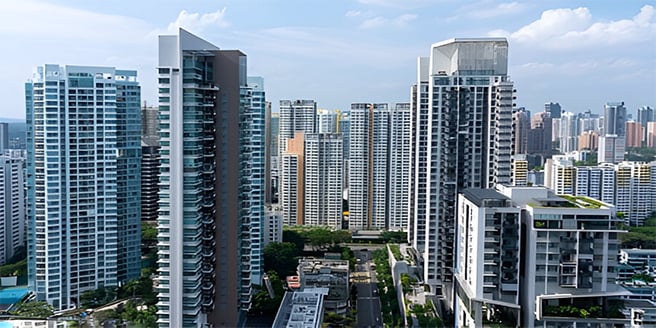
Thinking of buying a home in Navi Mumbai? This guide is your no-nonsense, from-the-heart roadmap.
Why This Article Matters to You
If you’re reading this, you’re not just “browsing.”
You’re probably thinking about making one of the biggest decisions of your life — buying a home in Navi Mumbai.
Maybe it’s your first. Maybe it’s an investment. Either way, the questions are real:
- “What’s the rate in this area?”
- “Am I paying the right price?”
- “Should I wait or buy now?”
- “Where are others investing?”
I’ve asked the same questions. I’ve seen clients stuck. And I’ve seen others build generational wealth just by choosing the right location at the right time.
So, here’s a guide that’s not just about numbers, but clarity.
Because at Revaa Homes, we believe real estate isn’t just about ROI — it’s about life decisions made right.
Not just square feet. This is where your future unfolds.
The Real Navi Mumbai in 2026 – A Quick Look
- Real 2026 spread: ₹6,500 per sq.ft in Taloja to ₹30,000+ in Nerul, Vashi and Seawoods — and that gap is the whole story (I break down why the portals’ “average” misleads you, below)
- YoY Growth (2025–26): 6–9% across most nodes; airport-corridor pockets (Ulwe, Panvel) run higher
- Hotspots: Taloja, Ulwe, Kharghar, Panvel, Nerul
- Driving Forces:
- Navi Mumbai International Airport
- Metro Line 1, 2 & 3
- Mumbai Trans Harbour Link (MTHL)
- Navi Mumbai Smart City development
Latest Property Registration Data (2026 Snapshot)
Real movement reflects real intent — and 2026 registrations are running hot.
- Mumbai-wide property registrations hit a 13-year high in April 2026 with 12,142 units.
- Stamp Duty Revenue: ₹1,115 crore in April alone — that’s 5% growth YoY.
- Navi Mumbai’s share continues to grow within MMR, thanks to infra and affordability.
- In Jan–Apr 2026 alone, Mumbai saw 52,896 transactions — Navi Mumbai was a significant contributor.
If you’re waiting for a “quiet” moment to buy — this isn’t it.
Area-Wise Property Rates in Navi Mumbai (2026)
We don’t guess rates — we track them across our own buyer pipeline and cross-check every number against 99acres rate trends before we quote a client.
| Area | Avg. Price (₹/sq.ft) | Price Trend YoY | Why Invest Here |
| Taloja | ₹6,500 – ₹9,000 | ▲ 4.5% | Most affordable, Metro Line 1 operational |
| Panvel | ₹9,000 – ₹14,500 | ▲ 6% | Affordable+luxury mix, NMIA-adjacent, MTHL accessible |
| Ulwe | ₹11,000 – ₹16,000 | ▲ 7.4% | Airport node, MTHL endpoint, biggest premium beneficiary |
| Kharghar | ₹11,000 – ₹18,000 | ▲ 2.3% | CIDCO-planned, ICP active, Metro + Palm Beach connectivity |
| Nerul | ₹24,000 – ₹30,000 | ▲ 8.5% | Established, land-scarce Palm Beach corridor (see our Is Nerul overpriced? deep-dive) |
| Vashi | ₹18,000 – ₹32,000 | ▲ 7% | Commercial heart, harbour line, APMC + Inorbit |
| Seawoods | ₹20,000 – ₹32,000 | ▲ 9.2% | Premium lifestyle hub + Seawoods Grand Central, top NRI pick |
| Dronagiri | ₹6,000 – ₹7,500 | ▲ 8% | Port-based economy, long-term bet |
What the portals don’t tell you (and why our number is different)
Here’s the honest bit most rate pages skip. Type “Navi Mumbai property rates” into a portal and you’ll get one confident number — Housing might show a band from roughly ₹6,322 to ₹20,777 a sq ft, 99acres and Square Yards will each show something different, and none of them will agree. They’re not lying. They’re just quoting different things and calling them the same word: “rate.”
When a client tells me “but the website said ₹12,000,” the first thing I do is unpack what that ₹12,000 actually means. Six things sit hidden inside every quoted rate. Get these wrong and you can overpay by 20–30% without realising it.
- Quoted rate vs registered agreement rate. The asking price a portal shows is what sellers hope to get. The registered agreement value — what actually changed hands, filed with the sub-registrar — is often 5–15% lower. Always anchor to registered deals in the same building, not listing prices.
- Carpet-area rate vs built-up-area rate. This is the biggest trick. A flat “at ₹15,000 a sq ft” on built-up area is really closer to ₹20,000 on carpet, because you’re paying for 25–30% of wall-and-common space you can’t live in. RERA mandates carpet-area pricing — always convert every quote to carpet before you compare.
- Base price vs all-inclusive price. The headline rate is the base. On top come floor rise, preferred-location charges, parking, club membership, GST, stamp duty and registration. All-in, your effective rate can be 12–18% above the number you were quoted. Ask for the final agreement value, not the brochure rate.
- New launch vs resale. In most nodes a new launch commands a premium; in land-scarce ones like Nerul, resale holds nearly the same rate. Comparing a new-launch quote against a resale average — or vice versa — gives you a false read. Match like with like.
- Sector and project quality. “Kharghar” spans ₹11,000 to ₹18,000 a sq ft depending on the sector, the developer and the amenities. A portal average blends a premium Sector 35 tower with a bare Sector 21 building and hands you a meaningless middle. The sector and the builder matter more than the node name.
- Data date and sample size. A rate built on five listings from three months ago isn’t a market rate — it’s noise. Fast-moving nodes like Ulwe and Panvel can shift 5–8% in a quarter. Always check when the data was pulled and how many transactions it’s based on.
Real Trends: What’s Actually Driving Navi Mumbai Rates in 2026?
1. Infrastructure is no longer a promise — it’s reality.
- MTHL connects Sewri to Chirle in 20 mins — boosting Panvel & Ulwe prices.
- Navi Mumbai Metro Line 1 (Belapur–Pendhar) is fully operational — sparking strong confidence among home buyers across Kharghar and Taloja.
- Navi Mumbai International Airport (NMIA) has been flying commercially since December 2025, with international routes from July 2026 — speculation has turned into real investment momentum.
2. Rental Yields Are Rising
- Kharghar: Avg. rental yield ~3.4%
- Ulwe & Taloja: Up to 3.8%
- Panvel: ₹12K–₹20K monthly rent for 2 BHK
3. Circle Rates (Ready Reckoner 2026)
The ready reckoner (circle) rate is the government’s minimum valuation for stamp duty — usually well below market, but a useful floor. For 2026–27, Maharashtra held Navi Mumbai’s reckoner rates broadly flat, so the figures below still hold; you can verify any address on the IGR Maharashtra portal.
| Location | Ready Reckoner Rate (₹/sq.m) | Approx. ₹/sq.ft |
| Vashi | ₹103,000 | ₹9,570 |
| Nerul | ₹43,000 | ₹3,990 |
| Belapur | ₹55,500 | ₹5,160 |
| Taloja | ₹56,100 | ₹5,215 |
| Ulwe | ₹58,800 | ₹5,460 |
| Panvel | ₹58,800 | ₹5,460 |
Note: actual market rates in Ulwe, Taloja and Panvel run 40–80% above their reckoner values — a clear sign of where the market expects future upside.
How to Analyze the Right Price: Tools & Techniques
You don’t need to be an expert — just ask the right questions.
Ask: Who’s buying here?
If locals, investors & NRIs are all eyeing one place (like Ulwe or Kharghar) — that’s a strong signal.
Check: Last 3-Year Price Trend
- Compare YoY growth on 99acres rate trends and cross-check registered deals on the MahaRERA portal — then sanity-check against our on-ground pipeline.
- Is it stable, rising, or volatile?
Evaluate: Price vs Future Value
Taloja at ₹6,500–₹9,000/sq.ft today might grow faster than Nerul at ₹24,000–₹30,000/sq.ft — because Metro Line 1 is fully operational and Taloja is still early in its appreciation phase, while Nerul is a mature, land-scarce market that compounds gently. Cheaper doesn’t always mean better value; it depends on your runway.
Confused Between Taloja and Ulwe?
Both are affordable airport-corridor bets, but they behave differently. Our Taloja vs Ulwe guide breaks down which one fits your budget and timeline — or talk to our area expert and we’ll map it to your exact plan.
Pro-Tip Tools from Our Experts
- CIDCO Land Use Map – Spot zones marked for future residential/commercial development.
- Google Maps Timeline – Check proximity to schools, hospitals, transit lines.
- Revaa’s Booking Pipeline Insights – Real data from 200+ leads/month showing buyer hotspots.
Micro-Location Focus: What Makes These Nodes Tick?
Taloja
- Metro Line 1 operational
- Ready Reckoner: ₹56,100/sq.m
- New RERA-registered launches around ₹8,000–9,000/sq.ft, like Codename City of Joy in Taloje Majkur
Ulwe
- CIDCO-planned Airport Node
- MTHL + Nerul–Seawoods–Belapur rail boost
- Circle rate ₹58,800/sq.m; market value ₹11,000–₹16,000/sq.ft (MTHL-driven appreciation, airport premium)
Kharghar
- High liveability index, top infrastructure
- April 2026 rate: ₹11,000–₹18,000/sq.ft (sustained appreciation driven by Metro Line 1, ICP bidding, and airport momentum)
- Paradise Sai Prerna in Sector 34-B & similar new launches seeing consistent traction
“Many missed Kharghar in 2015. Don’t miss Ulwe or Taloja in 2026.”
Looking at Navi Mumbai on the map? take a closer look at Metro Satyam Codename Waterfalls in Sector 36 by Metro Satyam Developers, or see Codename City of Joy in Taloje Majkur by Shree Builders & Developers.
From Our Story to Yours: Final Thoughts
Buying a home isn’t about timing the market.
It’s about timing your life.
If your heart says, “I want to settle,” then Navi Mumbai in 2026 is ready for you.
Let data guide you — but let clarity make the call.
Still unsure? Don’t make this decision in isolation — let’s walk it with you. Tell us your budget and timeline and we’ll help you make sense of your options.
Book a free property consultation
FAQs – Based on What Buyers Like You Ask
Q. Which is the cheapest area in Navi Mumbai to buy a home in 2026?
Taloja & Dronagiri are most affordable with flats under ₹45L.
Q. Where do NRIs prefer to invest in Navi Mumbai?
Ulwe, Seawoods, Kharghar — due to resale value and smart infrastructure.
Q. Is it better to buy ready-to-move or under-construction?
Depends on your risk appetite. Under-construction in Taloja/Ulwe offers better entry rates.
Q. Are property rates negotiable?
Yes. Especially in under-construction or newly launched projects. Always negotiate. Or ask us to do it for you.
Suggested Read Next
Is Nerul Overpriced in 2026? New vs Resale & the Honest Verdict
CIDCO Home vs Private Project: Honest Pros & Cons
Panvel Real Estate Guide 2026: Prices, Sub-Markets & Buyer Playbook
Why Navi Mumbai is Better Than Bangalore for NRI Investors (2026)
Maharashtra Reckoner Rates: How Buyers Save Before the Cutoff

