

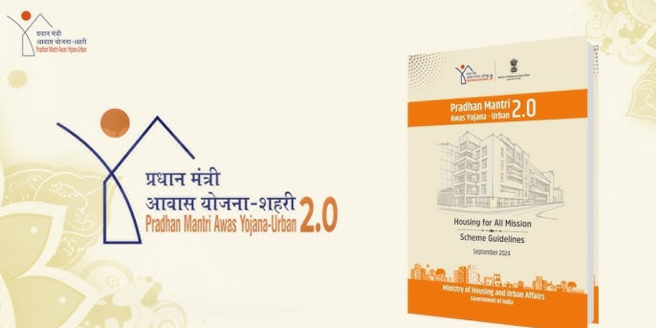
If you’ve been Googling “PMAY ₹2.67 lakh subsidy” in 2026 — I have to be the first to tell you: that scheme is closed. And almost every article still ranking for the term hasn’t bothered to update.
I see this every week. A first-time buyer walks into a site visit, calculator in hand, expecting ₹2.67 lakh off their home loan EMI. They’ve already mentally spent it on registration or interiors. Then the lender pulls up the actual scheme, and the number is a different one — smaller, with stricter rules, and a shorter window.
This guide cuts through that. I’ll show you exactly what closed and when, what’s actually live in 2026, who qualifies, how much you really save, and which Navi Mumbai projects fit the new ₹35-lakh cap. No false hope. No marketing fluff. Just the truth a first-time buyer needs before signing anything.
1. The Real Talk: Why “₹2.67 Lakh PMAY” Articles Are Misleading You
The ₹2.67 lakh subsidy figure was real — once. It came from the original Pradhan Mantri Awas Yojana Credit-Linked Subsidy Scheme (PMAY-CLSS), specifically for the MIG-I bracket (incomes ₹6–12 lakh). For five years that scheme genuinely helped middle-income first-time buyers shave ₹2.5 lakh+ off their effective loan cost.
Here’s what changed:
- CLSS for MIG-I and MIG-II (the ₹2.67 lakh bracket) — closed on 31 March 2021. No fresh applications accepted after that date.
- CLSS for EWS and LIG — closed on 31 March 2022.
- Source: PMAY-Urban official CLSS page + Ministry of Housing PIB release.
So if a blog you’re reading still says “Get up to ₹2.67 lakh PMAY subsidy in 2026” without flagging the closure — that blog is either lazy, or it’s hoping you don’t check. Either way, don’t bank money on it.
The good news: a replacement scheme is live. It’s smaller, but it’s real. Let’s break it down.
2. What Actually Exists in 2026: PMAY-U 2.0 Interest Subsidy Scheme (ISS)
The Cabinet approved PMAY-Urban 2.0 in August 2024, and the Interest Subsidy Scheme (ISS) — the modern replacement for CLSS — went live on 1 September 2024. The window runs until 31 August 2029, so you have a real five-year runway, not a closing-soon panic.
The headline numbers, straight from the PMAY ISS official page:
- Interest subsidy: 4% per annum, on the first ₹8 lakh of your home loan
- Tenure: Subsidy applies for up to 12 years of the loan
- Maximum loan eligible: ₹25 lakh
- Maximum house value: ₹35 lakh
- Maximum subsidy you can pocket: ₹1.80 lakh total (NPV ₹1.50 lakh)
- How it’s paid: Five annual installments of ₹36,000 each, credited directly to your loan account, provided more than 50% of the principal is still outstanding and the loan isn’t an NPA
So the honest comparison is: old MIG ₹2.67 lakh → new ISS ₹1.80 lakh. About a third less, and the rules around who can claim it have tightened too. Worth it? Yes — for the right buyer, in the right project, at the right ticket size. Let’s see if that’s you.
3. Are You Actually Eligible? The 5-Question Test
Before you fill a single form, run yourself through these five questions. If you can’t say YES to all five, the subsidy isn’t yours — and no lender or broker can fix that.
Q1. Is your annual household income within the cap?
This is the gate. PMAY-U 2.0 ISS uses a single MIG cap that’s tighter than the old CLSS:
| Category | Annual household income | Carpet area cap |
| EWS (Economically Weaker Section) | up to ₹3 lakh | 30 sq.m |
| LIG (Lower Income Group) | up to ₹6 lakh | 60 sq.m |
| MIG (Middle Income Group) | up to ₹9 lakh | 120 sq.m |
Notice the MIG cap dropped from the old ₹18 lakh to ₹9 lakh. That single change has knocked many double-income Mumbai households out of the new scheme — be honest about your combined household income before you start.
Q2. Is this your family’s first pucca house?
The scheme is for genuine first-time owners. You, your spouse, or any unmarried child cannot already own a pucca house anywhere in India. If your father gifted you a flat in your hometown five years ago — even if you’ve never lived in it — you’re out.
Q3. Have you taken any government housing benefit in the last 20 years?
Central, state, or local — any housing scheme benefit (subsidy, allotment, grant) in the past 20 years disqualifies you under PMAY-U 2.0. Be especially careful if your parents claimed any old IAY or state-level scheme — joint-family situations can trip this up.
Q4. Is the home value within ₹35 lakh and the loan within ₹25 lakh?
The agreement value (not just the loan amount) must be ≤ ₹35 lakh, and the bank loan ≤ ₹25 lakh. In Navi Mumbai’s mature pockets — Vashi, Nerul, Sanpada, Kharghar central — that ceiling rules out almost everything. But further out — Taloja, parts of Panvel, Pushpak Nagar, Karanjade, Roadpali — there’s still real PMAY-eligible inventory.
Q5. Will you actually live in this house?
PMAY is for self-occupation, not investment. The flat must be the family’s primary residence. Tenants in your own name? Investors hoping for rental yield? Wrong scheme. The lender flags self-occupation status during the post-disbursement audit, and false declarations can mean recovery of the subsidy plus penalties.
4. The Subsidy Math: ₹36,000 a Year for 5 Years
Buyers hear “₹1.80 lakh subsidy” and picture a ₹1.80 lakh discount on Day One of the loan. That’s not how it works.
Here’s the mechanics:
- You take a home loan up to ₹25 lakh from any PMAY-empanelled bank or HFC.
- The lender flags your loan to NHB (National Housing Bank) under ISS.
- Each year for five years, ₹36,000 (₹1.80 lakh ÷ 5) gets credited directly into your loan account, reducing your principal.
- Each annual release happens only if your loan is performing — not delinquent, not classified as NPA — and you still have more than 50% of the principal outstanding at the time.
- EMI doesn’t drop dramatically; what you get is a shorter effective tenure and lower total interest paid over the life of the loan.
Quick worked example. ₹25 lakh loan at 8.5% for 20 years = roughly ₹21,700/month EMI. Add the ISS effect: each ₹36,000 annual credit acts like a part-prepayment, knocking down principal. Across all five releases, you’ll save approximately ₹1.4–1.6 lakh in total interest paid (NPV ₹1.50 lakh, matching the official NPV figure). Read it as a five-year discipline reward, not a sign-on bonus.
One reality check from my desk: at today’s home-loan rates (8.4–8.75% range across major banks in April 2026), a single percentage point of rate negotiation often beats the entire PMAY subsidy. So shop your loan as hard as you’d shop the flat. The Maharashtra Reckoner Rates and stamp duty math stack on top — none of these helps if the base loan is mispriced.
5. Carpet Area Limits: Which Navi Mumbai Projects Actually Qualify
Even if you clear income and ownership tests, the property itself has to fit. The ₹35-lakh ceiling and the carpet area cap together knock out most of central Navi Mumbai. Here’s the realistic 2026 map.
PMAY-eligible belts + projects in Navi Mumbai (April 2026)
Here’s an honest, named map of where PMAY-fit inventory actually sits on our desk. Treat the project names as starting points to verify — the ₹35-lakh cap is on agreement value, so the specific tower, floor, and 1 BHK configuration matter. Always confirm the current ticket and carpet area against the cap with the developer or our team before applying.
- Taloja Phase 1 & entry sectors — best concentration of PMAY-fit 1 BHKs in Navi Mumbai. Verify entry-level configurations in Sai Ayaana, Sai Sun City, Siddhivinayak Homes, Shubham Jijai Angan, Omkara Pride, Sai Shri Narayana. Smallest 1 BHKs in the older sectors regularly land at ₹28–34 lakh agreement value.
- Pushpak Nagar (Panvel) — NMIA-corridor belt with rising prices but compact 1 BHKs still in cap. Look at Riddhi Siddhi Apartment, Bhagwati Elysia IV, Sai Ekadrishta, Geo Bhaveshwar Hills, and Delta Greens. Move fast — NMIA effect is pulling tickets above cap each quarter.
- Karanjade, Roadpali, Kalamboli (outer Panvel) — older inventory and resale 1 BHKs frequently fit cap; new launches mostly above. Worth scanning resale listings before new launches here.
- Kamothe older sectors & outer Taloja — resale 1 BHKs around ₹30–35 lakh. Inventory is thinning, but if you find one that fits cap and has clean RERA + title, act quickly.
For filterable inventory, the 1 BHK flats for sale in Taloja directory and the 75+ new residential projects in Panvel directory are the fastest sweep. Cross-reference with our Taloja Phase 1 vs Phase 2 price guide to choose the right phase for your budget.
Honest note: premium Panvel projects that don’t fit the cap (but are worth knowing)
If you’ve already looked at projects like La Mer One Growth City, 4D Life Avinya, Arihant Aspire, or Tricity Heritage — they’re solid Panvel inventory, but their entry tickets typically start above ₹60 lakh. That’s well past the PMAY ₹35-lakh ceiling. Worth a look on their own merits, not as PMAY plays. Same logic for Arihant Clan Aalishan in Upper Kharghar and the Kharghar mid-premium lineup — those are different brackets entirely.
Belts where PMAY almost never fits
Vashi, Nerul, Seawoods, Sanpada, Kharghar central, Belapur. April 2026 zone averages run ₹17,500–₹31,000 per sq.ft (per 99acres zone data) — even a 30 sq.m EWS-spec flat lands above ₹35 lakh. Don’t waste a site-visit Sunday hoping otherwise.
6. The Application Process — Without the Runaround
The application happens in two parallel tracks: the government portal (where you self-register and check status) and the lender (who actually files your ISS claim with NHB). Both have to align for the subsidy to flow.
- Self-register on the official portal: Go to pmaymis.gov.in, choose Citizen Assessment, enter Aadhaar details for the applicant + family members, fill the standard form, upload documents. You’ll receive a beneficiary ID — keep it.
- Pick a PMAY-empanelled lender: SBI, HDFC, ICICI, IDBI, LIC HFL, Aavas, Aadhar — most majors are listed. Submit your home-loan application along with the PMAY beneficiary ID.
- Lender filings: The lender forwards your loan to NHB under ISS. You don’t deal with NHB directly — the lender owns this step.
- First credit (after disbursement): Once the loan disburses and the property is registered in your name, the first ₹36,000 typically lands in your loan account within 6–12 months. The next four come yearly thereafter.
- Track status: Use Aadhaar number lookup on the portal to track beneficiary status and disbursement milestones.
Documents you’ll be asked for
- Aadhaar (mandatory) — applicant + every adult family member
- PAN, Voter ID, or passport — at least one for ID
- Latest 6 months’ salary slips, or last 2 years’ Form 16 / ITR
- Income certificate from a competent authority — especially if you’re claiming EWS or LIG
- Active bank account linked to Aadhaar
- Property documents — registered Agreement to Sale, approved building plan, RERA registration of the project
- Self-declaration that no family member owns a pucca house anywhere in India
RERA registration of the project is a hard gate. Don’t even start the application for a non-RERA project — it’ll be rejected at the lender stage.
7. The Mistakes That Disqualify Buyers (And How to Fix Them Before Applying)
Across the buyers I’ve walked through this in 2025–26, these five patterns rejected the most applications. Read them before you submit.
- Forgotten ancestral property. “My father gifted me a small plot in 2018 — does that count?” Yes, it does. Pucca property anywhere in India, in your name or your spouse’s, kills eligibility. Either gift it back before applying (with proper paperwork) or accept that PMAY isn’t for you.
- Combined-income blindspot. Couple A earns ₹6 lakh + ₹4 lakh = ₹10 lakh combined. They assumed each gets MIG status individually. The cap is household income, not individual. Above ₹9 lakh combined and you’re out.
- Buying for parents to live in. If your name is on the agreement and the parents are the actual occupants, that’s not “self-occupation” by you. Get your parents on the agreement directly, or this is the wrong scheme.
- Choosing a project above the cap. The brochure says “starts at ₹38 lakh”. You think a corner unit might be ₹35 lakh. The actual agreement value (with parking, society, GST) lands at ₹39 lakh. PMAY rejected. Always work backward from agreement value, not brochure price.
- Skipping the official portal. Some lenders say “we’ll handle everything” and you skip the citizen-assessment registration on pmaymis.gov.in. Months later, your subsidy hasn’t disbursed because there’s no beneficiary ID on file. Always self-register first; the lender’s filing is a separate step.
For a deeper read on the cost-side traps in Navi Mumbai’s affordable belt, see our 10 hidden traps in affordable housing guide and the Navi Mumbai stamp duty & registration guide. The PMAY subsidy is just one cost layer — the others stack on top.
8. Navi Mumbai Reality Check: Where ₹35 Lakh Gets You a Real Home
Let’s drop the abstractions and get specific. At April 2026 listing data:
- Taloja Phase 1 (entry-level 1 BHKs): ₹26–35 lakh agreement-value range for ~30–40 sq.m carpet. PMAY-fit. Best inventory among Navi Mumbai locations.
- Pushpak Nagar (Panvel): 1 BHKs at ₹30–38 lakh; some launches still fit, others edge above. Always verify carpet area and agreement value before excitement.
- Outer Panvel / Roadpali / Karanjade: Resale and older inventory at ₹28–34 lakh; new launches mostly ₹40 lakh+ post-NMIA effect.
- Kamothe older sectors: Resale 1 BHKs around ₹32–35 lakh; carpet often 35–45 sq.m. PMAY-fit but inventory is thinning.
An honest reframing: ₹35 lakh in Navi Mumbai today buys you a 1 BHK in a peripheral or transit-developing location, not a 2 BHK in a core sector. If your home goal is genuinely 2 BHK in Kharghar central or Nerul, PMAY-U 2.0 isn’t the lever for you — bargain harder on rate, time the launch cycle, or look at Panvel vs Taloja for budget-stretched 2 BHK options.
For broader 2026 zone-level pricing across Navi Mumbai, see our Navi Mumbai property rates guide.
9. Frequently Asked Questions
Is the ₹2.67 lakh PMAY subsidy still available in 2026?
No. The ₹2.67 lakh CLSS subsidy for MIG-I closed on 31 March 2021, and the EWS/LIG component closed on 31 March 2022. The replacement scheme — PMAY-U 2.0 ISS — caps at ₹1.80 lakh and runs until 31 August 2029. Any 2026 article still claiming ₹2.67 lakh is using outdated data.
What’s the maximum subsidy under PMAY-U 2.0 ISS?
₹1.80 lakh total (NPV ₹1.50 lakh), disbursed as five annual installments of ₹36,000 each, credited directly to your loan account. The subsidy applies to the first ₹8 lakh of your home loan at 4% interest rate subsidy, for up to 12 years tenure.
What income qualifies under PMAY-U 2.0?
Annual household income up to ₹3 lakh (EWS), ₹6 lakh (LIG), or ₹9 lakh (MIG). Note the MIG cap is now ₹9 lakh — significantly tighter than the old CLSS ₹18 lakh. Combined household income matters, not individual income.
Can I claim PMAY if I already own a flat?
No. You, your spouse, or any unmarried child cannot already own a pucca house anywhere in India. The scheme is strictly for first-time pucca-house owners. Any prior central, state, or local housing benefit in the last 20 years also disqualifies you.
What’s the maximum house value and loan amount?
Agreement value up to ₹35 lakh, loan up to ₹25 lakh. The 4% interest subsidy applies only on the first ₹8 lakh of the loan. In Navi Mumbai, this realistically means 1 BHKs in Taloja, Pushpak Nagar, outer Panvel, or older Kamothe sectors.
Can I rent out a PMAY home?
No. PMAY-U 2.0 is strictly for self-occupation by the family. The lender audits self-occupation status post-disbursement. False declarations can lead to recovery of the subsidy plus penalties.
How do I apply for PMAY-U 2.0 in 2026?
Two steps. First, self-register on pmaymis.gov.in via Citizen Assessment with your Aadhaar to get a beneficiary ID. Second, apply for a home loan with a PMAY-empanelled lender (SBI, HDFC, ICICI, LIC HFL, etc.) — the lender forwards your loan to NHB under ISS. The first ₹36,000 typically credits within 6–12 months of disbursement.
10. The Honest Verdict — Should You Bank On PMAY in 2026?
If you’re a genuine first-time buyer, household income within ₹9 lakh, looking at a ₹30–35 lakh home in Taloja, outer Panvel, Pushpak Nagar, or older Kamothe — yes, claim it. ₹1.80 lakh of effective interest savings over five years is real money. Run the application, register on the portal, pick an empanelled lender, ask for the ISS forwarding paperwork in writing.
But if your goal is a 2 BHK in Kharghar central or anywhere in the Vashi–Nerul–Sanpada premium belt — PMAY isn’t built for you. Don’t structure your purchase around the subsidy. Negotiate on rate. Watch launch cycles. Consider Panvel East as the budget-stretch alternative. The infra story (NMIA live, Atal Setu live, Metro Line 1 running) is the bigger lever for your wealth than ₹1.80 lakh ever will be.
And if a broker or builder is selling you a project on the basis of “you’ll get ₹2.67 lakh PMAY subsidy” — walk out. They’re either misinformed or hoping you are. You deserve better.
If you want me to walk you through whether your specific income, target project, and Navi Mumbai location actually qualify — drop me a message via RevaaHomes.com. I’ll give you the honest answer in 15 minutes, no broker fluff.
Updated April 2026. Sources: PMAY ISS official, PMAY-Urban CLSS closure notice, PIB press release, HDFC PMAY-U 2.0, IDBI eligibility PDF.

