

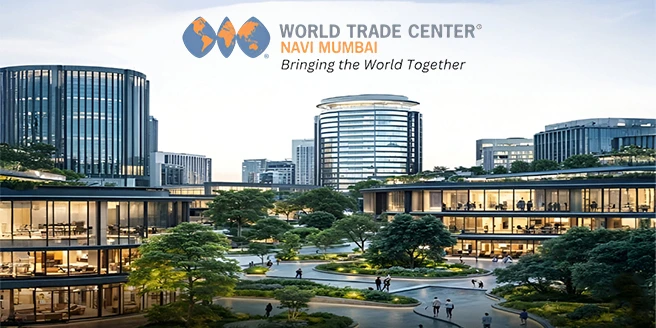
When you type “World Trade Center (WTC) Navi Mumbai” into Google, it’s not a casual search.
It means you’re already picturing something bigger — a home where your family belongs, or an investment you’ll look back on and say, “I got in at the right time.”
I know that mix of excitement and doubt — the late-night comparisons, the calls with brokers, the heart asking for security while the mind keeps calculating. Buying a home isn’t just about four walls; it’s about pride and belonging.
That’s why WTC Navi Mumbai isn’t just another project. It’s a symbol — a global landmark rising in our backyard, shifting Navi Mumbai from “second option” to a city stepping onto the world stage.
The question isn’t “Should I look here?” but “Where should I act before the world catches on?”
In this guide — refreshed for April 2026 — you’ll see why WTC matters, how other cities transformed, which Navi Mumbai micro-locations will benefit most, and which verified homes are worth your trust.
1. Why WTC Navi Mumbai Matters? (Beyond the Glossy Brochure & ADs)
The World Trade Center isn’t only about glass towers or luxury offices. It’s part of a worldwide family — 300+ WTCs spread across New York, Dubai, Amsterdam, Bengaluru, Pune, and now, Navi Mumbai. That name alone brings global recognition, trust, and credibility.
Think about what that means for you as a buyer or investor:
- Connectivity unlocked — and it’s no longer “coming soon”. The Navi Mumbai International Airport (NMIA) went live for commercial operations on 25 December 2025 and is scaling from 22 to 78 daily departures across the summer 2026 schedule. The Atal Setu (MTHL) has been operational since January 2024, Metro Line 1 (Belapur–Pendhar) has been running since November 2023, and the Panvel–Karjat suburban rail corridor opens between March and July 2026. JNPT remains India’s largest container port. WTC isn’t arriving in a “future” Navi Mumbai — it’s arriving in one already wired up.
- Employment magnet — Global companies set up shop in WTCs. Jobs attract people. People drive housing demand.
- Identity shift — For the first time, Navi Mumbai won’t just be known as “affordable Mumbai.”
It’s stepping into the world map with a landmark that redefines its image.
And here’s the truth: people aren’t just buying property near WTC — they’re buying a future they can be proud of.
2. A Quick Look at WTC’s History in Indian Cities
Before we talk about Navi Mumbai’s future, it helps to pause and ask: what happens when a World Trade Center comes up in an Indian city? Because the answer isn’t theory — it’s already been written in Bengaluru, Pune, and Noida. Each of these places looked very different before WTC arrived, and what happened after shows us the kind of shift Navi Mumbai is about to experience.

- WTC Bengaluru (2008–09)
Before: IT hub without a global business landmark.
After: Office absorption surged, residential prices nearby grew 40–50% in a decade, and MNCs like Amazon & Siemens anchored here.
- WTC Pune (2011)
Before: Hinjewadi seen as too far and mostly industrial.
After: WTC brought credibility, driving 30–40% residential growth and stronger rental yields.
- WTC Noida (2014)
Before: Greater Noida lacked investor trust.
After: Sentiment improved, SMEs and startups moved in, with 25–35% property appreciation nearby.
📊 You can see how Bengaluru, Pune, and Noida all experienced 30–50% growth in real estate values once a WTC was established — making Navi Mumbai’s case much stronger.
👉 Navi Mumbai is simply the next in line — with NMIA already live, Atal Setu in service, Metro Line 1 running, and WTC under active build all converging at the same time.
3. Timeline: When Will WTC Navi Mumbai Be Ready?
- Commercial Towers: Phased build active across the 60-acre Raheja District in Juinagar. The 39-storey Raheja Prime tower — the first WTC-branded office address in Navi Mumbai — is targeting phased commercial occupancy from 2026 onward, with offices starting around ₹1.15 Cr.
- Retail & Business Hub: The Town Plaza and supporting wings are staged for 2027–28, in step with the second phase of WTC towers.
- Full Ecosystem Maturity: Around 2030, by which time NMIA’s international wing, Metro Line 2 (Taloja–Khandeshwar) — 8.15 km, ₹5,575 Cr, currently under construction — and the Pendhar–NMIA spur are all expected to be live.
👉 For buyers, this means: act now = enter before the global tenant rush, while infra is going live and pricing still has room.
4. Micro-location Impact of WTC Navi Mumbai (Estimated Influence)
Not every corner of Navi Mumbai will feel WTC’s impact in the same way. Some micro-locations will rise faster, some will grow steadily, and a few will see only a gentle ripple. Understanding this map of influence helps you decide where your money and life fit best.

🔴 Major Impact (30–40% uplift over 5–7 years)
These are closest to WTC + Airport + Metro corridors, and will see maximum appreciation:
- Panvel (East & West) — Directly influenced by NMIA + WTC; expect 35–40% growth.
- Juinagar / Sanpada / Nerul / Seawoods — Palm Beach belt with Raheja, Kamdhenu, L&T; premium prices will climb 30–35% due to global tenant demand.
- Kharghar (Central & Extension) — Education hub + metro + lifestyle + spillover from WTC zone; 30–35% growth potential.
🟠 Moderate Impact (20–30% uplift)
Strong spillover markets that are already semi-developed but will get a boost from commercial/residential demand:
- Belapur — Administrative hub, CBD offices; 25–30%.
- Ulwe — Metro + Airport adjacency; 20–25%.
- Kamothe — Affordability-driven market, catching rental demand; 20–25%.
🟡 Lower but Noticeable Impact (10–20% uplift)
Further away from WTC but still in Navi Mumbai’s growth orbit. Appreciation here will be slower but steady:
- Taloja / Taloja Extension — 15–18%; industrial proximity + metro help, but demand will be budget-driven.
- Kalamboli — Logistics hub, 15–20%, tied to highway development.
- New Panvel (Outer belts) — 15–20%, long-term play with Airport connectivity.
How Buyers Should Read This
- If you’re buying for living + prestige → Go for Premium zones (Juinagar, Nerul, Seawoods, Sanpada) → maximum lifestyle + status gain.
- If you’re buying for balanced ROI + family needs → Kharghar, Belapur, Panvel East → strong appreciation + livability.
- If you’re buying for pure affordability / early investment → Taloja, Ulwe, Kamothe → lower entry cost, safer rental plays.
5. Emotional Angle: Living in the Shadow of a Global Landmark
Imagine your child pointing from the balcony: “That’s the World Trade Center.”
It’s more than pride — it’s belonging. For families, it means better schools, safety, and lifestyle woven into an international ecosystem. For professionals, it means career opportunities right where they live. For investors, it’s the ultimate trust signal: “Global names don’t settle in weak markets.”
And perhaps the biggest truth? Nobody wants to look back five years from now and say, “I had the chance, but I hesitated.” Buying near WTC Navi Mumbai is as much about avoiding regret as it is about chasing returns.
6. Revaa Homes Verified Residences Near WTC Navi Mumbai
When we say “verified,” it’s not just RERA paperwork — it’s projects we’ve walked into, developers we’ve checked for credibility, and micro-locations we’ve tracked for years. Here’s how the Navi Mumbai map shapes up when you’re buying with WTC in mind:
🔹 Premium Segment (Sanpada – Juinagar – Seawoods – Nerul)
Perfect for NRIs, high-net-worth families, and prestige buyers looking for status + lifestyle + proximity to Palm Beach Road.
- Kamdhenu Crown (Sanpada) — ₹3–9 Cr | Luxury 2–5 BHKs, landmark tower near Palm Beach.
- Kamdhenu Vogue (Sanpada) — ₹1.8–3.3 Cr | G+36 high-rise, premium location with metro/station access.
- Kamdhenu Zenith (Nerul) — ₹1.6 Cr+ | Compact deck residences for professionals.
- L&T Seawoods Residences (Seawoods) — ₹2.2–3.5 Cr | Integrated township, lifestyle + retail at your doorstep.
- Raheja Vashi NX – Solaris 1, 2, 3 (Juinagar) — ₹1.7–4.4 Cr | Futuristic township with Raheja trust.
👉 Why verified: These are prestige properties with strong brand pull and long-term appreciation near WTC.
🔹 Mid-Premium Segment (Kharghar – Belapur)
For families who want affordable luxury, education hubs, and lifestyle upgrades with steady appreciation.
- Arihant Clan Aalishan (Kharghar) — ₹1.2–3 Cr | Indo-Persian styled towers, aspirational family hub.
- Tricity Apire (Kharghar) — ₹1.1–1.5 Cr | Compact family homes, close to metro.
- Bhoomi Serenity (Kharghar) — ₹1.1–1.8 Cr | Modern residences with strong livability quotient.
- TVP Nisarg Aura (Kharghar Extension) — ₹90 L–1.4 Cr | Well-connected, RERA-approved, good for middle-income families.
- Hitech Cosmos (Kharghar) — ₹1.2–2 Cr | Balanced pricing, good for professionals wanting proximity to CBD Belapur.
👉 Why verified: These are the sweet spot for families moving up from budget homes, with excellent connectivity and schools.
🔹 Affordable Growth Segment (Panvel – Palaspe – Taloja)
For first-time buyers and long-horizon investors who want to enter early into Navi Mumbai’s Airport + WTC growth story. For a deeper read, see our Panvel rental income guide and the Panvel property rates breakdown.
- Rachna & Bhaveshwar Group’s 4D Life Avinya (Panvel East) — ₹75 L–1.5 Cr | Stylish new launch near station.
- Arihant Aspire (Palaspe) — ₹60 L–1.1 Cr | Affordable + functional homes with township feel.
- Sai Ayaana (Taloja) — ₹45–70 L | Entry-level project, ideal for first-time buyers.
- La Mer One (Panvel East) — ₹80 L–1.3 Cr | Boutique project with design appeal, good for young professionals.
- Siddhivinayak Homes (Taloja Ext.) — ₹45–80 L | Value-driven homes, strong entry ticket.
👉 Why verified: Affordable but well-located projects with clear Airport + WTC ripple effect.
🧭 What This Means for Buyers
- NRIs / Prestige Buyers: Stick to Sanpada, Juinagar, Seawoods, Nerul.
- Families (Lifestyle + Schools): Kharghar, Belapur — where Bhoomi Serenity, Nisarg Aura, Cosmos shine.
- First-Timers / Budget Investors: Panvel East (Avinya, La Mer One) and Taloja (Sai Ayaana, Riddhima).
7. Market Snapshot (April 2026)

Numbers aren’t just stats on a page — they help you answer the big questions circling in your head: Am I buying at the right price? Am I too late, or still early enough to benefit?
This snapshot of Navi Mumbai’s April 2026 property market shows you:
1. Where prices stand today.
2. Which micro-locations still have room to grow.
3. What segment each area is best suited for — families, first-time buyers, NRIs, or pure investors.
Think of it as a compass: it won’t make the decision for you, but it will help you walk into site visits and negotiations with clarity and confidence.
| Location | Avg Price (April 2026) | Growth Potential | Best For |
| Panvel East | ₹7,500–10,500/sq.ft (₹11,000–13,800 in NMIA-adjacent premium launches) | 35–40% | Balanced investors & families |
| Panvel West | ₹6,500–8,500/sq.ft | 25–30% | Budget-first investors |
| Kharghar | ₹17,000–22,000/sq.ft (premium sectors like 12 cross ₹22k) | 30–35% | Families, professionals |
| Juinagar / Sanpada | ₹25,000–31,000/sq.ft | 30–35% | Premium lifestyle buyers |
| Nerul / Seawoods | ₹28,000–31,000/sq.ft | 30% | NRIs, high-net-worth |
8. Rental Yield & NRI Angle
When people think “investment,” they don’t just dream of price appreciation — they ask: “What if I rent it out? Will I get returns month to month?”
- Current Yield (April 2026):
- Navi Mumbai’s established nodes like Vashi, Nerul, and Sanpada now fetch 2.8–3.5% gross rental yield — premium prices keep yields tight.
- Panvel runs higher at 3.5–4.5%, with airport-linked tenant demand finally showing up in the data — and well-located 2BHKs now leasing at ₹17K–22K/month. See the Navi Mumbai 2BHK price guide for the full carpet-area-vs-rent map.
- Future Yield (Post-WTC, 2028+):
- With global firms anchoring at WTC, demand for compact 1 & 2BHK homes near Juinagar, Kharghar, and Panvel East will spike.
- Yields could climb to 4.5–5.5%, especially in projects with walk-to-station access.
- NRI Confidence Boost:
- NRIs prefer global names — and WTC is a brand they instantly trust.
- Add NMIA — already live since December 2025 — and suddenly they can fly in directly, inspect, and manage investments without the old commute drag.
- For many NRIs, it’s not just ROI — it’s pride in owning a piece of “India’s next global hub.”

The chart compares current yields (April 2026) with the post-WTC trajectory (2028+) across Vashi/Nerul, Sanpada/Juinagar, Panvel East, and Panvel West.
- 🟦 Blue = current rental yield.
- 🟩 Green = projected yield boost after WTC + Airport stabilise.
- 💡 Extra note highlights the NRI angle: compact 2BHKs near Juinagar/Sanpada & Panvel East will attract the strongest rental demand.
👉 Takeaway: If you’re an NRI or investor, compact units near Juinagar, Sanpada, and Panvel East are the smartest rental plays. Families as tenants = stability; professionals as tenants = higher yields.
9. Airport + WTC = Twin Catalysts
Most cities grow on the back of one mega-project. Navi Mumbai is blessed with two, rising together:
- Navi Mumbai International Airport (NMIA):
- Live for commercial operations since 25 December 2025. Domestic schedule is scaling from 22 to 78 daily departures across 46 destinations through the summer 2026 timetable, with about 156 air-traffic movements/day at peak.
- International operations were originally planned for the 29 March 2026 summer schedule but have been deferred (West Asia conflict). Operator targets 50,000 daily passengers by December 2026, with full international rollout staged into the winter schedule starting 25 October 2026.
- Hotels, logistics, aviation-linked jobs, and global traffic are already showing up in the demand data for Pushpak Nagar, Ulwe, and South Panvel.
- World Trade Center (WTC):
- Magnet for MNCs, SMEs, and global conferences.
- Anchors international attention on Navi Mumbai’s commercial strength.
💡 Think of it like Bengaluru’s Electronics City + Kempegowda Airport story rolled into one.
- The airport connects Navi Mumbai to the world’s boardrooms.
- The WTC ensures those boardrooms set up offices right here.
👉 Takeaway: For buyers, this isn’t just real estate — it’s like catching two compounding waves at the same time.
10. ⚠️ Risks & Reality Check
It’s easy to get carried away by glossy brochures. But let’s talk honestly about what could go wrong — and how you can safeguard yourself.
- Timeline Delays:
- Mega projects (airport, metro, WTC) often stretch by 1–3 years — NMIA’s international wing has already slipped by ~2 quarters in 2026.
- Smart buyers plan for delayed possession, not just brochure promises.
- Speculative Pricing:
- Some developers may overshoot prices just by adding “near WTC” in marketing.
- Protect yourself by checking circle rates + nearby resale deals.
- Liquidity Crunch:
- Plots or fringe locations may become hard to sell later.
- Stick to verified RERA-approved projects near stations, metros, or Palm Beach Road.
👉 Takeaway: Don’t gamble on hype. Anchor your money where real families will want to live, even if WTC hype cools for a while.
11. Buyer Personas: Who Should Buy Where?
Every reader is asking the silent question: “But is this for me?” Let’s make it crystal clear:
- For Families (Safety + Schools + Lifestyle):
- Best bet: Juinagar, Nerul, Kharghar.
- Why? Established infra, schools, hospitals, and fast commutes.
- Example: Raheja Solaris or Arihant Clan Aalishan = family-friendly ecosystems.
- For NRIs / Prestige Seekers (Status + Prime Connectivity):
- Best bet: Seawoods, Sanpada, Palm Beach Road.
- Why? Strong brand recognition, easy airport access, high-profile addresses.
- Example: L&T Seawoods or Kamdhenu Crown.
- For First-Time Buyers (Budget + Growth):
- Best bet: Panvel East / West, Taloja.
- Why? Lower entry price, big upside with NMIA + Metro Line 2 + WTC ripple effect.
- Example: Marathon Nexzone, 4D Avinya, Siddhivinayak Riddhima.
- For Pure Investors (Yield + Future Exit):
- Best bet: Juinagar / Sanpada (2BHKs).
- Why? Compact homes here will see highest rental demand from WTC professionals.
👉 Takeaway: By mapping personas to micro-locations, every reader feels guided, not sold. They see exactly where they belong in Navi Mumbai’s growth story.
12. FAQs About Buying Near WTC Navi Mumbai
1. Isn’t it risky to invest before WTC is fully ready?
Waiting feels safe, but in real estate, early entry = best appreciation. WTC Pune & Bengaluru both rewarded those who bought before completion — they saw 30–40% growth within years of operations starting. If you wait till the ribbon-cutting in Juinagar, you’ll only pay the “ready premium.” And with NMIA already live since December 2025, the runway is shorter than most buyers think.
2. What if property prices are already inflated by hype?
True, some developers overuse “near WTC” in their ads. But April 2026 zone averages from 99acres still show a wide gap: Panvel East ₹7,500–10,500/sq.ft and Kharghar around ₹17,500/sq.ft are still meaningfully lower than Sanpada/Nerul/Seawoods at ₹28,000–31,000/sq.ft. That price gap is your margin of safety — and your opportunity.
3. Will I get tenants if I invest here?
Absolutely. WTCs worldwide bring a wave of professionals. Bengaluru’s WTC zone saw rental demand jump 25% in 5 years. Navi Mumbai will repeat this pattern. Compact 2BHKs near stations will be the most in-demand rentals for WTC employees and NMIA staff — and yields in Panvel are already firming up at 3.5–4.5% gross.
4. Isn’t Panvel too far compared to Mumbai?
That used to be the line. In 2026 it isn’t. The Atal Setu has been operational since January 2024, Metro Line 1 (Belapur–Pendhar) since November 2023, the Panvel–Karjat suburban rail opens between March and July 2026, and NMIA went live commercially on 25 December 2025. Panvel sits at 30–40 minutes from South Mumbai today — not someday.
5. What if big promises (Airport/WTC) get delayed?
Delays are real — NMIA’s international wing has already slipped from March to (target) winter 2026. But here’s the hedge: buy verified projects near stations & metros. Even if WTC takes longer, your property still serves end-user demand, protecting your capital while you wait.
6. Should I buy for living or investment?
Both work — it depends on who you are:
Families → Juinagar, Nerul, Kharghar (ready infra, schools).
Investors → Panvel East/West, Juinagar 2BHKs (strong ROI + rental demand).
NRIs → Seawoods, Sanpada, Palm Beach (prestige + liquidity).
7. What’s the worst-case scenario?
Worst case? Delays and slower appreciation. But unlike speculative plots, verified RERA apartments near infra will always find buyers/renters. You’re protected by location + livability.
13. Final Reflection
Buying near WTC Navi Mumbai isn’t about chasing hype — it’s about securing a future where your family belongs, your money grows, and your decisions give you pride.
This is one of those rare moments where a city changes forever. The question is: will you just watch it happen, or step in and make it part of your story?
At Revaa Homes, I don’t see you as a lead — I see you like family, standing at a big life decision.
You’ve already done the dreaming and doubting; my role is simply to walk beside you, filter the noise, and guide you to a choice you’ll thank yourself for.
So if WTC Navi Mumbai is on your mind, don’t let hesitation steal the moment. Let’s walk the ground together, explore verified homes, and find what feels right for you.
✨ Because you’re not just buying property — you’re buying certainty, pride, and a place in Navi Mumbai’s global story.

